Teaching Executive Functioning Goals Through A Vacation Planning Task
- Dec 3, 2025
- 8 min read
Updated: Dec 6, 2025
For years, I found myself squinting at small-font worksheets, watching my older clients disengage as we worked through yet another task focused on what they struggled with.
The materials available often highlighted deficits rather than building confidence. I kept thinking: there has to be a better way to teach executive functioning skills.
That's when I asked myself a simple question: What if we practiced these skills through something clients actually want to do?
In this post, we will review a highly motivating task I created for adults and teens to target executive functioning skills in your next speech therapy session!
This post is all about executive functioning goals

Why This Vacation Planning Task Works
Planning a vacation isn't just fun—it's packed with real executive functioning challenges. Students need to:
Budget and prioritize (What matters most on this trip?)
Research and compare options (Which flight? Which hotel?)
Track multiple details (Flight numbers, costs, amenities)
Plan ahead (Booking midweek flights, considering hidden fees)
Problem-solve (What if I'm going over budget?)
Make decisions (Balance luxury experiences with free activities)
These are the skills we need for everyday independence whether that’s organizing college or work demands, managing a living space, planning travel and appointments.
The Shift from Deficit to Motivation
Traditional executive functioning worksheets often feel remedial. They highlight what students can't do. But when you hand a teen or adult a vacation planning task, their eyes light up. Suddenly, they're engaged because the outcome matters to them.
The task includes both air travel and road trip options, letting students choose what appeals to them. Want to plan a beach getaway? A city adventure? A national park road trip? The framework is the same, but the personal investment transforms the experience.
Real-World Application Built In
The worksheets walk students through genuine considerations travelers face:
Comparing flight costs with baggage fees and seat selection
Calculating gas costs using MPG and distance
Balancing "big ticket" experiences with free local attractions
Building in emergency funds and unexpected costs
Tracking totals across multiple categories
These aren't hypothetical scenarios. These are skills they'll use when budgeting for real-world travel, planning weekend getaways, or coordinating trips for work and family.
The Reflection Component
What makes this tool particularly valuable is the reflection section. Students don't just complete the task—they think about how they completed it:
How did you make decisions when faced with multiple options?
What did you notice about your planning process?
What would you do differently?
This metacognitive piece helps adults understand their own executive functioning patterns. Maybe they chose the first option without comparing. Maybe they got overwhelmed and needed to break the task into smaller steps. These insights carry over to every planning task they'll face from managing bills to coordinating travel to juggling daily responsibilities.
Beyond the Worksheet
The pre-planning section encourages adults to identify their priorities first. Is this trip about luxury accommodations? Cultural experiences? Quality time? Relaxation? This goal-setting piece is crucial because effective planning starts with knowing what you value.
The budgeting tips feel relevant and practical. Clients learn about midweek flights, hidden airline fees, grocery store stops instead of fast food, and using gas apps. These are strategies they can actually use in real travel situations.
Who This Works For
-adults
-higher level clients with cognitive impairments
I created this with higher level clients such as adults post stroke, TBI or with other cognitive impairments. Client's who would benefit from executive functioning practice but deserve age-appropriate, engaging materials.
Together, we will go through this lesson plan.
Your Script (in blue): Today we are going to be working on executive functioning through a vacation planning task. The skills we are going to target in this task are problem solving, decision-making and self-monitoring. Think about somewhere you have been dreaming of visiting!
First choose if you want to take a road trip of a flight and the amount of days. Now choose a budget that includes the flight, accommodation and four activities/attractions
👉🏻 (optional challenge: include miscellaneous charges like food, emergency fund, local transportation and shopping).
Before we being, let's reflect on our executive functioning skills. As you work this this activity, I want you to reflect on how you make decisions.
What can you do if you start to feel overwhelmed while planning?
👉🏻 This step is important to work on self-advocacy skills related to accommodations. This is a topic that can be generalized and beneficial in other settings, aside from this structured planning task. After an injury, there may be beneficial accommodations that can make your client's life more manageable. However they may not even be aware of these, so it is important to review this topic.
You can offer suggestions here such as ✅ writing down the information, ✅ taking a break, ✅ asking for help, ✅ reducing background noise if possible, ✅ de-cluttering the area, ✅ making the font bigger, ✅ using a computer verse smart phone or tablet, ✅ breaking the task into smaller sections
Notice if you are choosing the first thing you see or comparing options?
👉🏻 This step is important to emphasize for those with difficulties with self-monitoring, a crucial skills in executive functioning that can become impaired due to frontal lobe or right sided brain injuries, or other neurological disorders.
Now you will need to choose whether you want to to take a flight or go on a road trip to your dream destination!
Choice A: Flight travel
Choice B: Road Trip
Either way the scenario starts with tips on how to reduce costs during travel and then the planning begins!
For the flight travel task, start off by reviewing priorities when traveling. These priorities include, luxury accommodations, unique experiences, amazing food, relaxation and down-time, quality time with others, learning about the culture, buzzing city life or nature landscapes. Discuss with your client and have them mark off their priorities with an x in the box. Then review the remainder of the tips.

Next come up with their proposed budget, destination and dates of travel.

Now choose you flight and check to make sure it includes a checked bag, seat selection, travel insurance and if the flight is refundable.


Now for the fun stuff. They get to choose their accommodation

Research four attractions or activities

👉🏻 Here are some places where you can find attractions
Viator
Chatgpt
Trip Advisor
Airbnb Experiences
Google
Optional: Add miscellaneous charges such as meals, local transportation, airport ride costs, shopping budget and an emergency fund for the trip. Full disclosure: I usually do not include this part when I am using it in my speech therapy sessions, but thought I was add it in there as an extra challenge!

The budget tracker!! Add up the total cost....Now's the time to find out... did you stay within your budget?! It is set up in a way that they can self-reflect, answer the question and then circle yes or no to indicate if they stayed within their budget.

Choice B: Road Trip Planning
For the road trip travel task, start off by reviewing priorities when traveling. These priorities include, luxury accommodations, unique experiences, amazing food, relaxation and down-time, quality time with others, learning about the culture, buzzing city life or nature landscapes. Discuss with your client and have them mark off their priorities with an x in the box. Then review the remainder of the tips.

Next come up with a proposed budget, destination and dates of travel.

Next, calculate the Mileage and Fuel section. This includes the starting location, destination, total round trip miles, type of car, miles per gallon and cost per gallon.

Using this formula, calculate the cost of gas.
__________ # of miles / _______ Miles Per Gallon = _________ gallons x $ _________ price per gallon = Total Cost $_______
Let's break down a few examples
Example A:
Let's figure out how to use the above formula to calculate the cost of gas for a road trip from Atlanta to Charleston
Starting Location: Atlanta, Georgia
Destination: Charleston, South Carolina
Round Trip Miles: 600 miles (300 each way)
Type of Car: Honda HRV 2017
Miles Per Gallon (MPG): 27 miles per gallon on average
Cost Per Gallon: $3.25
FORMULA
600 miles / 27 miles per gallon (MPG) = 22.22 gallons x $ 3.25 price per gallon = $72.22 total cost of gas
Example B:
Let's figure out how to use the above formula to calculate the cost of gas for a road trip from Los Angeles to San Diego, California.
Starting Location: Los Angeles, California
Destination: San Diego, California
Round Trip Miles: 240 miles (120 each way)
Type of Car: Bronco Sport 2024
Miles Per Gallon (MPG): 23 miles per gallon on average
Cost Per Gallon: $4.60
FORMULA
240 miles / 23 miles per gallon (MPG) = 10.43 gallons x $4.60 price per gallon = Total Cost $47.98

Next calculate transportation and car prep. This includes the costs for a oil change, tune up, rental car or tire check/replacement.

Now for the fun stuff. Choose your accommodation.
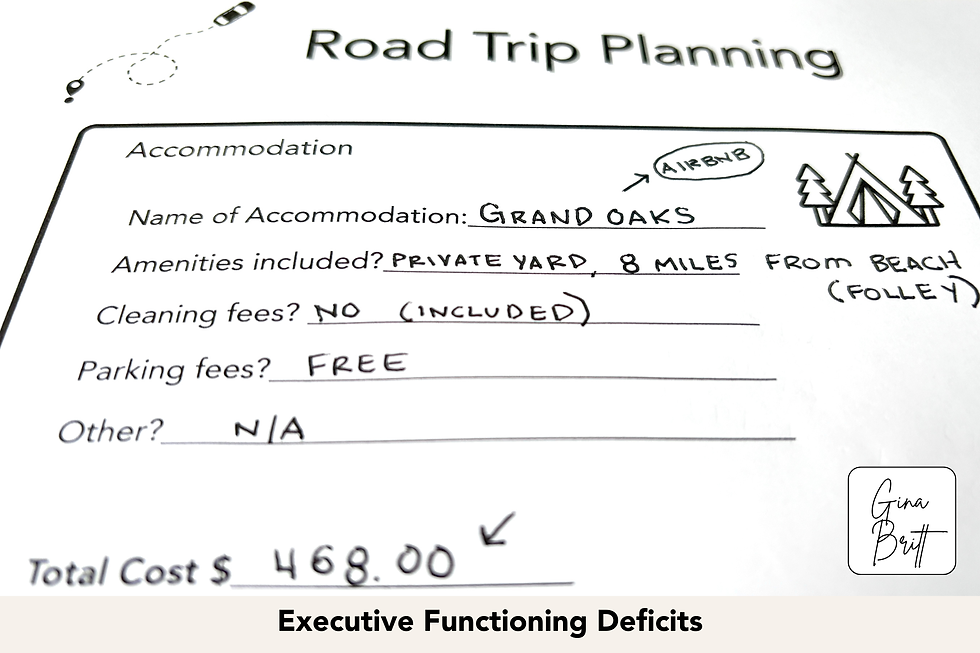
Research four attractions or activities

Optional: Add miscellaneous charges such as meals, local transportation, airport ride costs, shopping budget and an emergency fund for the trip.

Now for the he budget tracker!!
Add up the total cost....Now's the time to find out... did you stay within your budget?!
It is set up in a way that they can self-reflect, answer the question and then circle yes or no to indicate if they stayed within their budget.

The grande finale for both tasks
At the end you will provide thought provoking questions to enhance the self-awareness, self-monitoring, decision making process and overall executive functioning skills. Here are some examples of questions

Budgeting & Planning
🔴 Did you stay within your budget? Why or why not?
👉🏻 This question is important for self-reflection and self-monitoring.
🗣️ What was the most expensive part of your trip?
🗣️ What are unexpected costs that can come up when traveling?
🗣️ Did you find any creative ways to save money?
Decision-Making
👉🏻 These questions are important because it helps the client think more objectively about their own decision making process.
🗣️ When faced with two appealing options, how did you decide which one to choose?
🗣️What did you learn about your own decision-making process?
🗣️What are some strengths you have when it comes to planning and what areas do you need to work on?
Real-Life Connection
Did you need to use any accommodations when completing this task. If so, which ones ? (i.e. writing down the information, taking a break, asking for help, using a computer verse smart phone or tablet, breaking the task into smaller sections)
👉🏻 This question is important because it helps the client learn about what accommodations they may benefit from in real-life. It starts the process of self-advocacy, which will be a crucial part of their recovery or journey while learning to navigate life with executive functioning deficits.
What are three things you would do to prepare for this trip?
👉🏻 This question helps bring them one step closer to their dream vacation!
The Bigger Picture
Executive functioning develops through practice with tasks that matter. When students plan a vacation they actually want to take, they're motivated to work through the complexity. They persist when it gets tricky. They care about the outcome.
And that's when real learning happens.
This vacation planning task offers clear structure, readable fonts, and a positive framework. But more than that, it offers something many executive functioning resources miss: genuine motivation. Because sometimes the best way to teach planning skills isn't to focus on the deficit, it's to focus on the dream trip (coming from a travel lover myself).
The Vacation Planning Task includes both air travel and road trip planning options, complete with budgeting worksheets, reflection questions, and practical tips for real-world travel.
OR

Purchase On Teachers Pay Teachers

Thanks for reading about executive functioning goals
Speech therapy tips are served with a side of sarcasm